How to Maintain a Commercial Asphalt Parking Lot in Portland's Rainy Climate
Proper commercial paving maintenance can mean the difference between a parking lot that lasts 20-plus years and one that needs costly replacement ahead of schedule. For property managers and business owners in Portland, OR, the region's persistent wet season puts asphalt under stress that owners in drier climates rarely face. This guide covers what Portland's rainy climate does to commercial pavement and the practical steps you can take to stay ahead of the damage.
How Portland's Rainfall Accelerates Asphalt Deterioration
Water is asphalt's most persistent enemy. Portland averages roughly 44 inches of rain annually and sees measurable precipitation on approximately 154 days per year. That sustained moisture exposure gives water repeated chances to penetrate small surface cracks, soften the underlying base, and undermine the pavement structure from below.
Heavy rainfall runs from October through May, meaning pavement spends nearly half the year under constant moisture stress. Standing water accelerates oxidation of the asphalt binder, weakening the material that holds aggregate together and leading to raveling, edge cracking, and pothole formation. Portland also sees occasional hard freezes. Water trapped inside cracks expands when it freezes, widening those cracks and compounding damage with each subsequent rain event.
Sealcoating Schedule for the Pacific Northwest
Sealcoating creates a waterproof barrier across the pavement surface, slowing moisture penetration and protecting the asphalt binder from oxidation and chemical wear. For Portland properties, timing matters as much as frequency. Application requires at least 48 dry hours with no rain in the forecast, and Portland's reliable dry window runs from mid-July through mid-September. Property managers who delay often miss the season entirely, so scheduling in late spring for a summer application date is the practical approach.
A reapplication cycle of every two to three years is standard for commercial paving in the Pacific Northwest. High-traffic areas, such as drive-thru lanes or warehouse access roads, may benefit from attention on the shorter end of that range.
Crack Filling Before Winter
Crack filling ahead of the wet season may be the single highest-return maintenance task a property manager can perform. Small cracks that appear hairline-thin in September can widen significantly by February after repeated freeze-thaw cycles and heavy rain.
The best window for crack filling in Portland is late summer through early fall, roughly August through October. Routing and sealing cracks during this period keeps water from reaching the base layer over winter and reduces the chance a minor repair turns into a pothole or structural failure. Any commercial parking lot in the Portland metro area showing longitudinal or transverse cracking should be inspected by a paving contractor before November.
ADA Striping and Pavement Markings
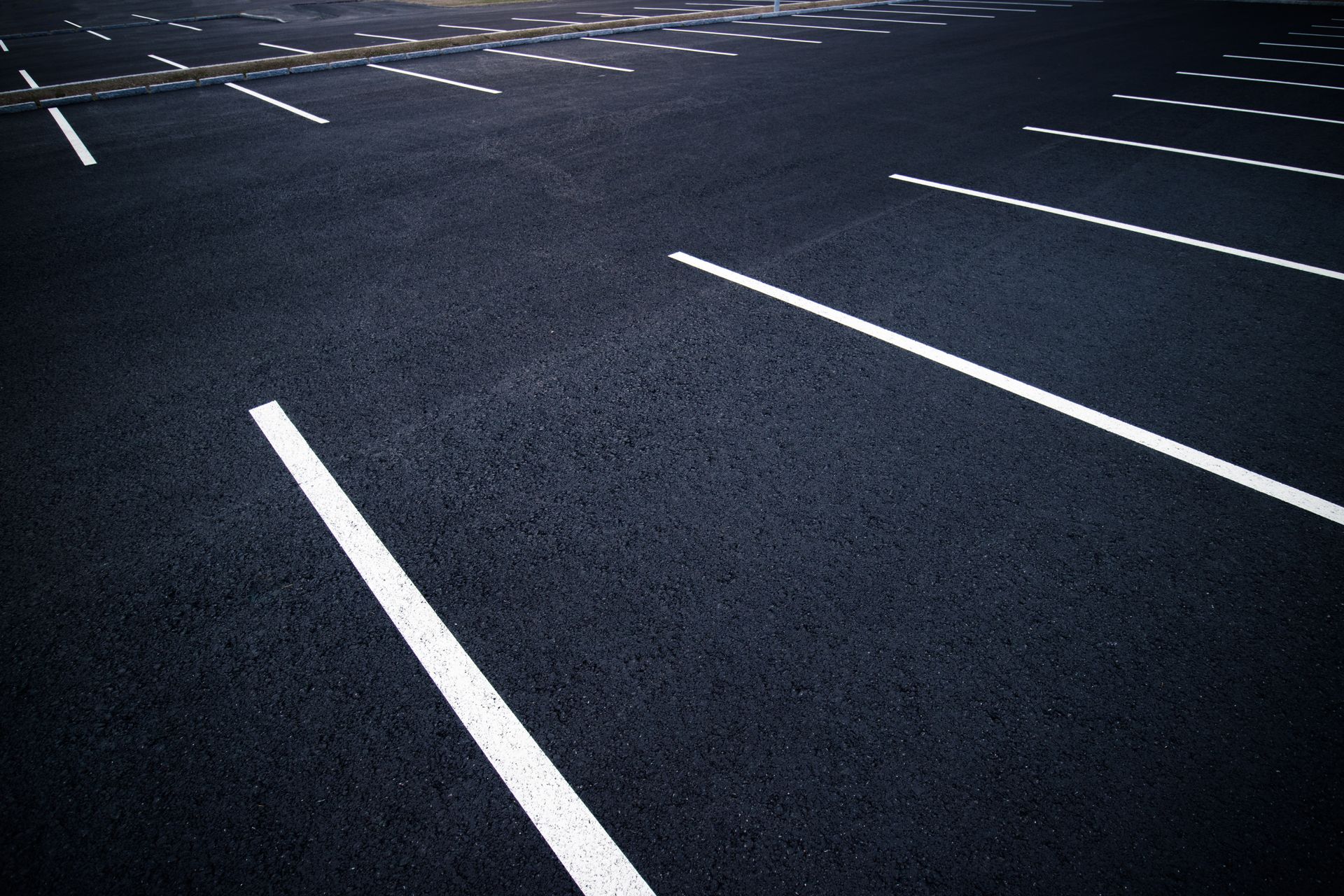
Pavement markings fade faster in Portland than in dry climates. Heavy rainfall and tire abrasion can strip thermoplastic markings noticeably within a single season. Faded ADA-accessible stall markings and fire-lane striping are not just cosmetic issues; they create compliance exposure and liability risk.
Inspect all markings annually and plan a full restripe when accessible stall indicators, crosshatching, or directional arrows have faded by roughly 50 percent or more. Many Portland property managers find a restripe every two to three years keeps lots compliant, though higher-traffic lots may need more frequent attention. Any commercial paving or resurfacing project is a good opportunity to review ADA stall dimensions, access aisles, and detectable warning surfaces.
Repair Versus Replace: How to Decide
Repair is often the right call when cracking covers less than 25 to 30 percent of the surface, base integrity is solid, and damage is concentrated in a limited section. Patching, crack sealing, and localized infrared repairs can extend a lot's life considerably in these situations.
Replacement makes more sense when alligator cracking appears across large areas, when the pavement shows base failure indicated by sinking or rolling sections, or when a lot is approaching 20-plus years of age with deferred maintenance. Continuing to patch a failing base is rarely cost-effective. Learn more about
commercial paving services in Portland to understand the full range of options.
Preventive Maintenance Checklist for Portland Commercial Lots
Property managers throughout Portland, OR, from the Lloyd District to Beaverton and Gresham, benefit from a structured annual approach. Key tasks to complete each year include inspecting the full lot surface in early fall for cracking, rutting, and drainage issues; filling and sealing all cracks before the October rainy season; checking drainage inlets and catch basins for blockages that cause ponding; assessing pavement markings for visibility and ADA compliance; scheduling sealcoating during the summer dry window if the surface is due; documenting areas of base failure or alligator cracking for contractor assessment; and reviewing any landscape or irrigation changes near the lot that may direct additional water onto the pavement.
How Often Should a Commercial Parking Lot Be Sealcoated in Portland?
For most commercial properties in Portland, OR, every two to three years is a reasonable target. High-traffic lots may benefit from reapplication closer to the two-year mark. Sealcoating must be applied during dry weather with no rain expected for at least 48 hours, making mid-July through mid-September the standard window.
When Is Crack Filling Most Effective for Portland Asphalt?
The most effective window is late summer through early fall, approximately August through October. Sealing cracks before the wet season prevents water from entering the pavement structure over winter, significantly reducing freeze-thaw damage.
What Are the Signs That a Commercial Parking Lot Needs Replacement Rather Than Repair?
Signs include widespread alligator cracking, visible base failure such as settling or soft spots, a lot 20 or more years old with deferred maintenance, and areas where repeated patching has not held. An assessment by a licensed contractor can confirm base damage and determine the most cost-effective path forward.
Get a Free Estimate From Portland's Experienced Commercial Paving Team
Rose City Paving LLC has been serving the greater Portland area since 1992, bringing more than three decades of commercial paving experience to lots of all sizes across Oregon and Washington. Whether your property needs crack filling, sealcoating, restriping, or a repair-versus-replace assessment, the team is ready to help.
Call
(503) 665-2330 to speak with a team member directly, seven days a week. Or contact us online<https://www.rosecitypaving.com/contact> to request a free, no-obligation estimate. You can also find and review
Rose City Paving LLC
on Google to read what Portland property managers and business owners have to say about working with the team.